Choosing a Wood Bed Frame With a Headboard: What Actually Matters
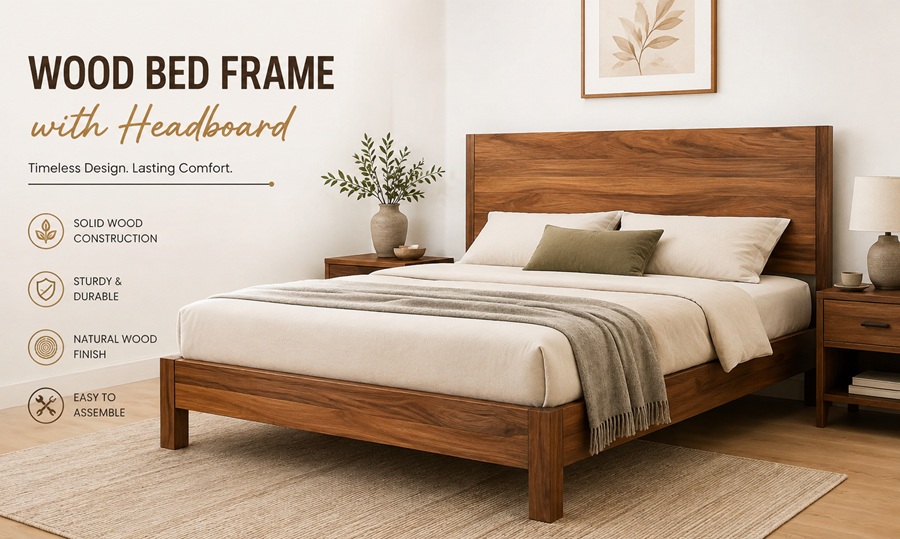
A bed frame is furniture you’ll own longer than almost anything else in the house, short of maybe a dining table. That longer ownership window changes what’s worth paying attention to at the point of purchase — construction and wood type matter more here than they might for a piece you’ll replace in a few years.
Solid Wood vs. Wood Veneer
Solid wood frames are built from single boards or glued hardwood panels throughout, while veneer construction applies a thin wood layer over an engineered wood core like plywood or MDF. Solid wood costs more but can be sanded and refinished repeatedly over decades; veneer is lighter and more affordable but can’t be refinished once the surface layer wears through.
| Construction | Cost | Refinishable? | Typical Lifespan |
|---|---|---|---|
| Solid hardwood | $$$ | Yes, multiple times | 30+ years |
| Hardwood veneer over plywood | $$ | Limited, once at most | 15–20 years |
| Engineered wood/MDF | $ | No | 8–12 years |
Wood Species and What They Offer
Oak
Oak is prized for its visible grain and exceptional durability, making it a common choice for frames expected to last generations. It takes stain well and resists denting better than softer woods.
Walnut
Walnut brings a rich, dark tone without staining and has become a favorite in mid-century and modern bedroom designs. It’s typically pricier than oak due to slower tree growth and more limited supply.
Maple
Maple offers a lighter, more neutral tone and very high durability, though its tight grain takes stain less predictably than oak, sometimes resulting in a blotchy finish without proper pre-treatment.
Pine
Pine is a softwood, considerably more affordable than the hardwoods above, but it dents and scratches more easily. It works well for a more rustic or farmhouse aesthetic where minor wear feels intentional rather than accidental.
Joinery: The Detail Most Buyers Skip Checking
- Mortise-and-tenon joints interlock wood pieces directly, offering the strongest and most durable connection
- Dovetail joints, common in higher-end frames, resist pulling apart even under repeated stress
- Screws and metal brackets alone are the weakest option and the most common point of failure over time
- Ask specifically about joinery method rather than assuming from marketing photos alone
| Tip: Gently shake a floor-model frame at the showroom. Excessive wobble or creaking usually points to bracket-and-screw construction rather than true joinery. |
Headboard Height and Room Proportions
| Ceiling Height | Recommended Headboard Height |
|---|---|
| 8 feet (standard) | 48–54 inches |
| 9 feet | 54–60 inches |
| 10+ feet | 60–72 inches |
- Measure your ceiling height before shopping, not just the mattress size
- Leave at least 6 to 8 inches of visible wall space above the headboard in most rooms
- Consider headboard width relative to nightstand placement on either side
- Taller headboards can visually shrink a low-ceilinged room if sized too aggressively
Matching Style to Bedroom Aesthetic
- Shaker or slatted headboards suit minimalist and modern farmhouse bedrooms
- Paneled or raised headboards fit traditional and transitional styles
- Live-edge or natural-grain headboards work well in organic modern or rustic spaces
- Upholstered-and-wood combination frames bridge modern comfort with classic wood detailing
Care and Longevity
Solid wood frames benefit from periodic dusting with a dry or slightly damp cloth and occasional conditioning with a wood-appropriate oil or polish, avoiding harsh chemical cleaners that can strip the finish over time. Keeping the frame away from direct heating vents and prolonged direct sunlight prevents uneven drying and fading.
Frequently Asked Questions
Is solid wood always better than veneer for a bed frame?
For long-term durability and the ability to refinish later, yes; but veneer construction can be a reasonable, lighter, and more budget-friendly option for shorter-term use.
What wood is most durable for a bed frame?
Oak and maple are generally considered among the most durable common options, resisting dents and wear better than softer woods like pine.
How tall should a headboard be for a standard 8-foot ceiling?
Most designers recommend 48 to 54 inches for standard ceiling heights, leaving comfortable clearance above the headboard.
How can I tell if a bed frame uses real joinery instead of just screws?
Ask the retailer directly about construction method, and if possible, gently test a floor model for wobble or creaking, which often signals bracket-and-screw assembly.
Do solid wood bed frames need special maintenance?
Periodic dusting and occasional wood conditioning are usually sufficient; avoid placing the frame in direct sunlight or right next to a heating vent to prevent warping or fading.
In Summary
A wood bed frame with a headboard is worth evaluating past its finish and photos. Check the joinery, understand what the wood species actually offers in durability and look, and size the headboard to your ceiling height, and it’s a purchase that reasonably outlasts most other furniture in the house.