How to Choose the Right Construction Site Location
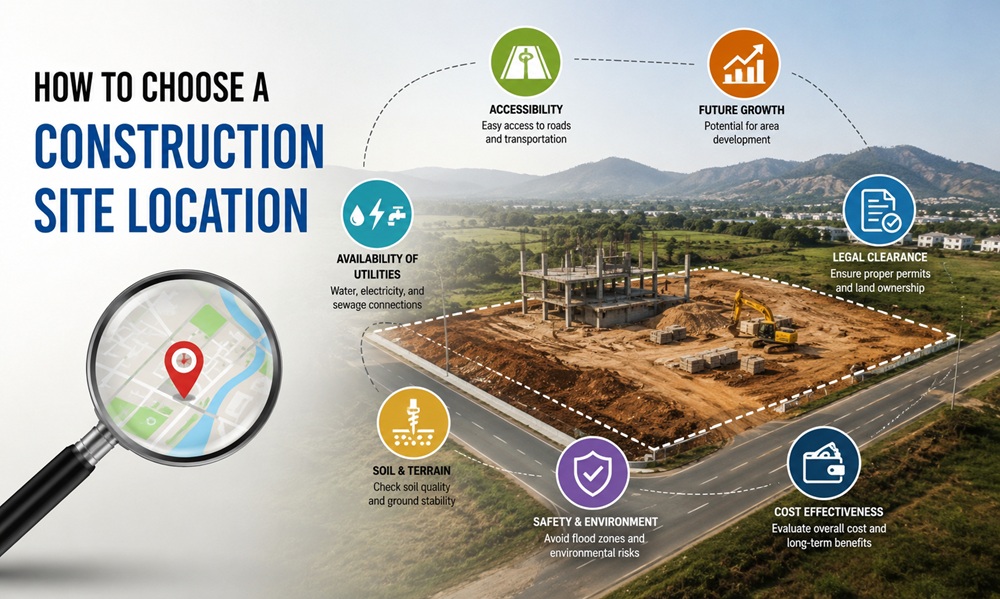
Choosing a construction site location requires evaluating soil conditions and drainage, zoning and permit requirements, proximity to utilities, site access for equipment and materials, and environmental factors like flood risk. A thorough site feasibility study before purchasing land helps avoid costly surprises that only surface once construction is already underway.
Picking the wrong site can turn a straightforward project into an expensive, delayed headache. Here’s a practical walkthrough of what actually matters when evaluating a potential construction site.
Beginner Guide to Key Site Factors
Soil conditions. Soil composition affects everything from foundation design to construction cost. Sites with poor load-bearing soil, high clay content, or unstable ground often require more expensive foundation solutions, so soil testing early in the evaluation process is essential rather than optional.
Zoning and permits. Local zoning laws dictate what can be built on a given parcel, including building height limits, setback requirements, and permitted use types. Confirming zoning compatibility before purchasing land prevents situations where an otherwise ideal site can’t legally support your intended project.
Utility access. Sites with existing access to water, sewer, electricity, and gas lines are significantly cheaper to develop than sites requiring new utility infrastructure to be run from a distance, which can add tens of thousands of dollars to a project budget depending on distance and terrain.
Site access. Consider how construction equipment and material deliveries will reach the site, including road width, weight limits on nearby bridges, and whether temporary access roads will need to be built.
Environmental factors. Flood zones, wetlands, and protected environmental areas can restrict or complicate development significantly. Checking FEMA flood maps and local environmental regulations early avoids discovering these restrictions after land purchase.
Common Mistakes Builders Make
One of the most common mistakes is skipping a formal soil test in favor of visual assessment alone. Soil that looks stable on the surface can have drainage or compaction issues below ground that only a proper geotechnical study reveals, and discovering these issues after breaking ground is far more expensive than addressing them during site selection.
Another common mistake is underestimating utility connection costs, particularly for rural or undeveloped sites that look appealing for their space and price but require extending water, sewer, or power lines a significant distance, sometimes at a cost that erases the savings from a lower land price.
Builders also sometimes overlook local zoning nuances, assuming a site’s general zoning designation guarantees approval for their specific project, when overlay districts, historic preservation rules, or neighborhood-specific restrictions can complicate or block certain types of construction even within compatible general zoning.
Site Selection Checklist
- Conduct a geotechnical soil test to assess load-bearing capacity and drainage
- Verify zoning designation and confirm your project type is permitted
- Check for any overlay districts, easements, or deed restrictions
- Confirm access to water, sewer, electrical, and gas utilities or estimate connection costs if not present
- Review FEMA flood zone maps and local environmental regulations
- Assess site access for construction vehicles and future occupant traffic
- Evaluate topography and grading needs, including drainage patterns
- Research any pending nearby development that could affect the site’s value or usability
What Is a Site Feasibility Study?
A site feasibility study is a comprehensive assessment conducted before purchasing land or beginning design work, evaluating whether a site can realistically support the intended project given its physical, legal, and financial constraints. It typically combines soil testing, zoning review, utility assessment, and often a preliminary cost estimate, giving developers a clear picture of a site’s viability before committing significant capital.
Should You Test Soil Before Buying Land?
Yes, testing soil before finalizing a land purchase is one of the most important steps in site selection. Soil testing reveals load-bearing capacity, drainage characteristics, and potential contamination issues that directly affect both construction feasibility and cost. Making soil testing a contingency in your purchase agreement, meaning the sale is conditional on acceptable test results, protects you from committing to a site that turns out to require expensive foundation work or remediation.
Balancing Cost and Location Quality
Sites with lower upfront land costs often come with hidden development expenses, whether that’s utility extension, soil remediation, or extensive grading work. A thorough feasibility study helps compare the true total cost of different sites rather than comparing purchase price alone, which can lead to choosing a site that looks cheaper initially but ends up costing more once development expenses are factored in.
Working with a civil engineer or land use consultant during the evaluation phase, even for smaller residential projects, often pays for itself by catching issues that aren’t obvious to someone without specialized site assessment experience.
Topography and Grading Considerations
A site’s natural slope and drainage patterns significantly affect construction cost and long-term building performance. Sites requiring extensive grading or retaining walls can add substantial cost, while poor natural drainage risks water pooling near foundations, leading to moisture problems long after construction ends. Walking a potential site after heavy rain offers valuable insight into how water actually moves across the property.
Researching Future Development Nearby
A site that looks ideal today can be affected by nearby development that hasn’t broken ground yet. Checking with the local planning department about pending zoning changes or proposed developments near a potential site helps avoid situations where a peaceful lot faces a busy new road or large commercial development shortly after construction wraps up.
Topography and Grading Factors
A site’s natural slope and drainage patterns significantly affect both construction cost and long-term building performance. Sites requiring extensive grading or retaining wall construction to create a level building pad add substantial cost that’s easy to underestimate when evaluating raw land based on price per acre alone. Poor drainage planning can also lead to water pooling near foundations after construction, a problem that’s far cheaper to address during site selection and design than to fix after a building is already in place.
Considering Future Development Nearby
Researching planned or pending development near a potential construction site is often overlooked but can meaningfully affect both property value and day-to-day usability once construction is complete. A quiet lot today could become considerably less desirable if a large commercial development or major road expansion is already planned nearby. Checking with the local planning department for any pending zoning changes or development proposals in the surrounding area is a relatively quick step that can prevent an unwelcome surprise a few years down the line.
Balancing Multiple Priorities
Rarely does a single site check every box perfectly. Most site selection decisions involve some level of tradeoff between cost, location convenience, soil quality, and development complexity. Ranking your priorities before starting the search, whether that’s minimizing construction cost, securing a specific location, or ensuring the fastest possible permitting timeline, helps you evaluate competing sites more objectively rather than being swayed by whichever property you happened to see first.