How Are Construction Cranes Assembled? Step-by-Step
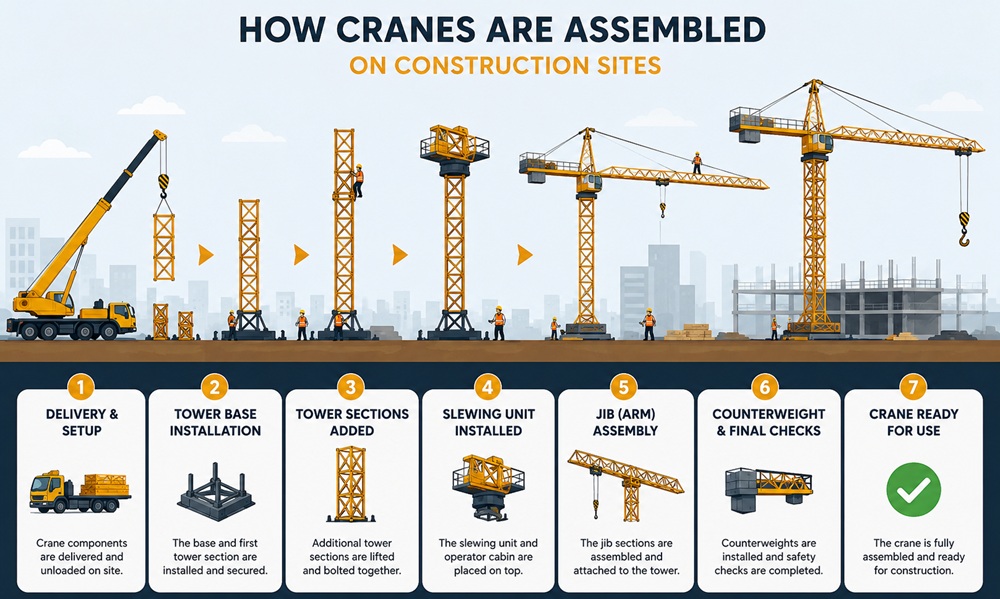
Construction cranes, particularly tower cranes, are assembled by first building a reinforced concrete foundation, erecting the base and mast sections using a smaller mobile crane, installing the slewing unit and operator cab, attaching the counter-jib and jib arms, and then adding counterweights to balance the structure. As the building rises, the crane “climbs” itself taller by adding mast sections from within its own structure, a process that can take anywhere from a few days for the initial setup to several hours per climb as the building grows.
Tower cranes seem to appear overnight on construction sites, but the process behind getting one operational is methodical and heavily safety-regulated. Here’s how it actually works.
What Is a Tower Crane Base?
A tower crane’s base is a reinforced concrete foundation, typically several feet thick and reinforced with steel rebar, designed to support the enormous weight and lateral forces the crane will experience during operation. The base is engineered specifically for the crane model and site conditions, accounting for soil composition, expected load weights, and local wind patterns. This foundation work often takes longer than people expect, sometimes several weeks, since the concrete needs adequate curing time before it can safely bear the crane’s weight.
Step-by-Step Assembly Process
1. Foundation preparation. Engineers assess soil conditions and pour a reinforced concrete base sized to the specific crane model and expected loads.
2. Base and initial mast sections. A mobile crane lifts and bolts the crane’s base section onto the foundation, followed by several initial mast sections that form the crane’s vertical tower.
3. Slewing unit installation. The slewing unit, which allows the crane’s upper structure to rotate, is installed on top of the mast sections.
4. Operator cab and machinery deck. The cab where the operator sits, along with the machinery deck housing motors and control systems, is added next.
5. Counter-jib installation. The counter-jib, the shorter arm opposite the main jib, is attached along with the counterweights that balance the crane during lifts.
6. Main jib attachment. The main jib, the long horizontal arm used for lifting materials, is assembled and attached, often in sections depending on the crane’s total reach.
7. Testing and certification. Before operation begins, the crane undergoes load testing and inspection to confirm all connections and safety systems function correctly.
How Long Does Crane Assembly Take?
Initial tower crane assembly typically takes two to five days once the foundation has fully cured, though this varies based on crane size, site accessibility, and weather conditions. The foundation curing process itself can take several weeks before assembly can safely begin, meaning the full timeline from foundation pour to operational crane is often four to six weeks total.
Why Does Crane Climbing Happen Mid-Build?
As a building rises beyond the crane’s initial height, the crane needs to grow taller to continue reaching all levels of construction. Tower cranes accomplish this through a self-climbing process, using a hydraulic climbing frame built into the crane’s structure. New mast sections are lifted up through the center of the crane and bolted in at the top, effectively growing the crane from within itself rather than requiring an external lifting crane for each addition.
This climbing process typically adds height in 10 to 20 foot increments and can be completed in a matter of hours by an experienced crew, allowing construction to continue with minimal downtime as the building grows taller.
Real-World Example: A Typical High-Rise Timeline
On a typical mid-rise commercial building project, the crane foundation might be poured during the site excavation phase, with the crane fully assembled and operational within the first month of construction. As the building progresses past the crane’s initial reach, usually every 8 to 10 floors depending on the crane model, the crew performs a climbing operation to raise the crane’s height, allowing it to continue serving all active construction levels without needing a second crane.
Crane Assembly Safety Considerations
Crane assembly is one of the more heavily regulated processes on a construction site, given the serious risks involved in erecting a structure that can be hundreds of feet tall. Assembly crews undergo specialized training beyond standard construction certifications, and OSHA regulations require detailed assembly and disassembly plans developed specifically for each crane and site before work begins.
Weather plays a significant role in scheduling assembly work, since high winds make lifting large crane components dangerous. Crews typically monitor wind speed closely and postpone assembly or climbing operations if conditions exceed safe thresholds for the specific equipment being used.
What Happens When the Crane Comes Down?
Once a building’s structural work is complete and the crane is no longer needed, it’s disassembled in reverse order, typically using a smaller mobile crane to remove sections from the top down, or in some cases using a second tower crane if site conditions require it. This disassembly process follows the same careful, regulated approach as the initial assembly.
Mobile Crane vs Tower Crane
Not every project uses a tower crane. Mobile cranes, mounted on trucks or tracked vehicles, suit smaller projects or short-duration lifts where a permanent tower crane isn’t cost-effective. They set up much faster than tower cranes but generally can’t match a tower crane’s height and lifting capacity for tall, long-duration builds like high-rise construction. The choice usually comes down to project duration and building height.
Crane Operator Training
Operating a tower crane requires specialized certification beyond a standard construction license, including classroom instruction and supervised hands-on experience before an operator works independently. Certification covers load calculations, weather-related operating limits, and emergency procedures, reflecting how much precision the role demands given the scale of equipment involved.
Mobile Crane vs Tower Crane
Not every construction project uses a tower crane. Mobile cranes, mounted on wheeled or tracked chassis, are commonly used for smaller projects or shorter-duration lifting needs, since they can be driven onto a site, used for a specific task, and driven away without the lengthy assembly and foundation work a tower crane requires. Tower cranes are generally reserved for taller buildings and longer-duration projects, where their height advantage and heavier lifting capacity over the full duration of construction outweigh the added setup complexity and cost.
Choosing between the two typically comes down to building height, project duration, and site space, since tower cranes require a dedicated foundation footprint and enough clearance for the jib to rotate freely without conflicting with neighboring structures.
Crane Operator Training
Operating a tower crane requires specialized certification beyond a standard construction license, typically involving both classroom instruction and extensive supervised hands-on training. Certified crane operators must demonstrate proficiency with load charts, understand wind limitations specific to their crane model, and pass practical examinations before operating independently on a job site. This rigorous training standard reflects how much precision and situational awareness is required to safely operate equipment lifting heavy loads at significant heights above an active construction site.
Why Crane Assembly Timing Matters for Project Schedules
Because crane assembly depends on foundation curing time, experienced project managers factor this into the overall construction schedule from the earliest planning stages, often ordering the crane and scheduling the foundation pour well before it’s actually needed for structural work, so the crane is ready and operational exactly when framing or steel erection begins.