How to Build a Bamboo Kitchen: Step-by-Step Guide
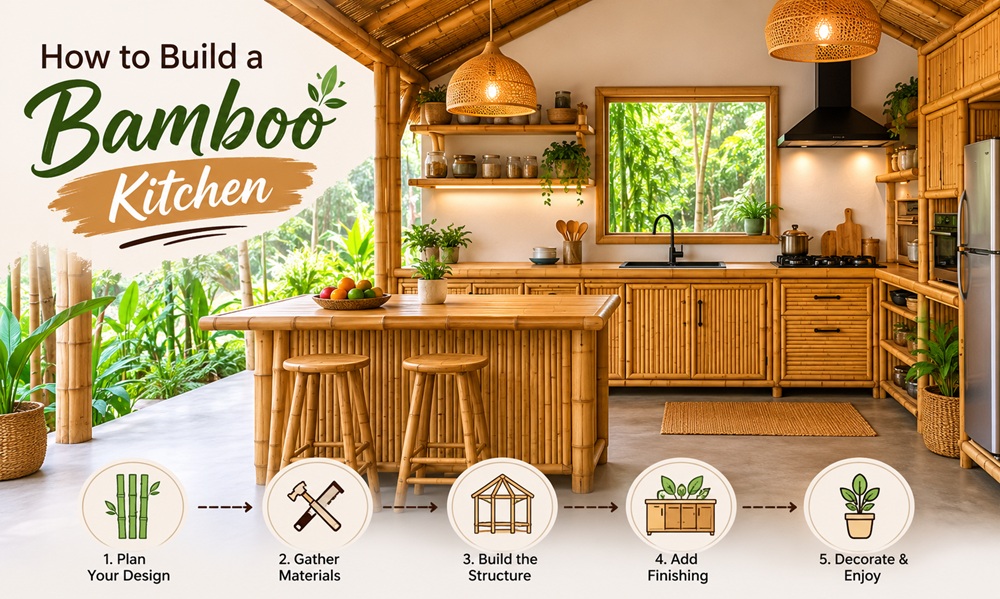
Building a bamboo kitchen involves selecting quality bamboo cabinetry or plywood, choosing between bamboo countertops or pairing bamboo cabinets with a different countertop material, and following a standard kitchen renovation sequence of demolition, layout, cabinet installation, countertop fitting, and finishing. Bamboo offers a sustainable, durable alternative to traditional hardwood, with strand-woven bamboo products rivaling or exceeding the hardness of oak.
Bamboo kitchens have grown in popularity thanks to their sustainability and distinctive look, but they’re built using many of the same principles as any kitchen renovation, with a few bamboo-specific considerations along the way.
Quick Answer: What You Need to Know First
Bamboo isn’t technically wood, it’s a grass, but manufactured bamboo products like strand-woven bamboo plywood are engineered to be extremely durable and are commonly used for cabinets, countertops, and flooring. A full bamboo kitchen typically costs comparable to or slightly more than mid-range hardwood cabinetry, with the exact price depending on the bamboo grade and finish you choose.
Materials Checklist
- Bamboo plywood or pre-built bamboo cabinet boxes
- Bamboo countertop slabs (or an alternative countertop material if mixing finishes)
- Cabinet hardware (hinges, handles, drawer slides)
- Food-safe sealant for countertops
- Standard kitchen renovation tools (level, drill, saw, clamps)
- Backsplash material of choice
- Plumbing and electrical supplies if relocating fixtures
Detailed Step-by-Step Build Guide
1. Plan your layout. Start with a kitchen layout plan, whether keeping your existing footprint or reconfiguring the space. Bamboo cabinets come in standard sizing similar to traditional cabinetry, so most standard kitchen layout plans translate directly.
2. Remove old cabinetry and fixtures. Demolition should be done carefully if you’re planning to reuse any existing plumbing or electrical connections, since bamboo cabinet installation typically follows the same wall-mounting process as standard cabinets.
3. Install cabinet boxes. Bamboo cabinet boxes are installed using the same wall-mounting and leveling process as traditional wood cabinets, starting with upper cabinets before base cabinets to ensure proper alignment throughout the space.
4. Fit and seal the countertop. Bamboo countertops require careful sealing with a food-safe finish, since bamboo is naturally more porous than hardwoods like maple or oak. Multiple coats of sealant, reapplied periodically, help protect against moisture and staining in a kitchen environment.
5. Add hardware and finishing touches. Install handles, hinges, and any decorative elements, then complete the space with a backsplash and any final trim work.
6. Final sealing and inspection. A final check of all seals, particularly around the sink and stove areas where moisture exposure is highest, helps ensure long-term durability.
Is Bamboo Good for Kitchen Cabinets?
Yes, bamboo is a strong choice for kitchen cabinets, particularly strand-woven bamboo, which is manufactured through a compression process that makes it harder and more moisture-resistant than many traditional hardwoods. It resists warping better than solid wood in humid kitchen environments and offers a distinctive grain pattern that stands out from standard oak or maple cabinetry.
Bamboo vs Wood Kitchen: Key Differences
Bamboo grows and regenerates significantly faster than hardwood trees, typically reaching maturity in three to five years compared to decades for oak or maple, making it a more renewable material choice. In terms of performance, quality strand-woven bamboo often matches or exceeds the hardness of traditional hardwoods, though raw, non-engineered bamboo products can be softer and less durable, so checking the manufacturing process matters when comparing options.
Cost-wise, bamboo cabinetry is generally comparable to mid-range hardwood options, occasionally slightly less expensive due to bamboo’s faster growth cycle and lower material cost, though high-end bamboo products with premium finishes can cost similarly to higher-end hardwood cabinetry.
Sustainability Considerations
Bamboo’s fast growth cycle and ability to regenerate from the same root system without replanting make it one of the more sustainable material choices available for kitchen renovations. Look for bamboo products certified by organizations that verify sustainable harvesting practices, since not all bamboo sourcing is equally responsible, and some lower-cost bamboo products use adhesives with higher formaldehyde content, which is worth checking for if indoor air quality is a priority.
How Much Does a Bamboo Kitchen Cost?
A full bamboo kitchen renovation, including cabinets, countertops, and installation, typically ranges from $8,000 to $25,000 depending on kitchen size and finish quality, comparable to a mid-range traditional hardwood kitchen renovation. Bamboo flooring, if included in the project, typically adds $3 to $8 per square foot depending on the grade and installation method chosen.
Maintenance and Care Tips
Bamboo countertops and cabinets benefit from periodic resealing, typically every six to twelve months for countertops that see regular water and food contact, to maintain their moisture resistance and appearance. Avoid excessive standing water on bamboo surfaces, and clean with mild, non-abrasive cleaners to protect the natural finish over time.
Choosing the Right Bamboo Grade
Not all bamboo products are equal. Horizontal and vertical grain bamboo, made by gluing bamboo strips together in visible patterns, offers a classic look but softer performance. Strand-woven bamboo, made by compressing shredded bamboo fibers under high pressure, produces a denser, harder material better suited to high-traffic kitchen surfaces like countertops and flooring. Ask which manufacturing process was used before buying, since strand-woven products offer meaningfully better durability.
Combining Bamboo With Other Materials
A full bamboo kitchen doesn’t require every surface to be bamboo. Many homeowners pair bamboo cabinets with a different countertop material, like quartz or butcher block, either for aesthetic contrast or because an area like the sink benefits from a more water-resistant surface. This mixed approach can also help manage budget while still delivering much of the bamboo kitchen’s distinctive look.
Choosing the Right Bamboo Grade
Not all bamboo products are created equal, and understanding grading terminology helps avoid disappointment after installation. Strand-woven bamboo, created by compressing shredded bamboo fibers under high pressure with resin, is the most durable option and generally recommended for high-use areas like countertops and cabinet fronts. Horizontal and vertical grain bamboo, made by gluing bamboo strips together in visible patterns, offers a more traditional bamboo look but is somewhat softer and less moisture-resistant than strand-woven varieties, making it better suited to lower-impact areas like cabinet interiors or decorative panels rather than heavily used countertop surfaces.
Pairing Bamboo With Other Kitchen Materials
Many homeowners choose to use bamboo for cabinetry while selecting a different material, such as quartz or granite, for countertops, particularly in kitchens where heavy cooking activity makes a fully bamboo countertop less practical. This hybrid approach still captures much of the sustainable and visual appeal of bamboo while addressing durability concerns in the highest-wear areas of the kitchen.
Working With Contractors on a Bamboo Build
Not every general contractor has extensive experience with bamboo specifically, so it’s worth asking directly about past bamboo installation experience before committing to a contractor for this type of project. Contractors familiar with bamboo’s unique properties, including its sensitivity to certain adhesives and its specific sealing requirements, are more likely to deliver a kitchen that performs well long after installation rather than developing issues from techniques better suited to traditional hardwood.