
Modern Tudor House Style: Key Features and Design Ideas
A modern Tudor house keeps the style’s signature steep rooflines, prominent chimneys, and brick or stone exteriors, but simplifies the decorative half-timbering and pairs it with cleaner window lines, updated black or bronze hardware, and a more neutral exterior color palette. The goal is honoring the historic bones of the style without it feeling like a period reproduction.
Tudor homes have long carried a reputation for feeling heavy or dated, but that reputation usually comes from outdated finishes rather than the architectural style itself.
Myth: Tudor Style Always Looks Dated
The idea that Tudor homes can’t look current usually comes from seeing them with original dark wood trim, heavy leaded glass, and dim interior lighting layouts from the early-to-mid 1900s. These finishes were common when the style was built, not requirements of the architecture itself.
In reality, the strong architectural bones of a Tudor home — the steep rooflines, arched doorways, and prominent chimneys — are exactly the kind of character-rich details that many newer homes lack, making Tudor homes a strong foundation for a fresh, updated look.
What Defines a Modern Tudor House?
A modern Tudor exterior typically keeps the steep, complex roofline and a prominent chimney as focal points, while simplifying or removing excessive half-timbering in favor of cleaner brick or stone surfaces. Windows often shift to black-framed casement or double-hung styles rather than small, heavily divided panes, letting in more light while still nodding to the traditional multi-pane look.
Exterior color palettes tend toward warm whites, soft grays, or deep charcoal on brick or stucco, replacing the darker, more saturated tones common in older Tudor homes.
Rooflines remain one of the most defining and least-altered features in a modern update. Steeply pitched, often asymmetrical rooflines with multiple intersecting gables are central to the style’s identity, and most successful modern Tudor renovations work around this feature rather than trying to simplify or flatten it, since doing so tends to erase the very silhouette that makes a Tudor home recognizable.
Can You Update a Tudor Home Without Losing Its Character?
Yes — the key is updating finishes and hardware while preserving the structural details that define the style, like the roofline, chimney placement, and arched entryways. Removing or covering these defining features to make a Tudor home look more contemporary generally weakens its character rather than modernizing it successfully.
Exterior Updates That Keep the Tudor Style Fresh
Repainting brick or stucco in a lighter, more neutral tone instantly modernizes a Tudor exterior while keeping its architectural details intact. Swapping dated hardware — house numbers, light fixtures, door handles — for black or aged bronze finishes ties the exterior together with a more current look.
Simplifying landscaping with structured, low-maintenance plantings rather than dense, overgrown foundation shrubs also helps a Tudor home read as updated rather than untouched since its original construction.
Updating or adding exterior lighting is another relatively low-cost change with a noticeable effect. Sconces flanking the entry door in an updated finish, paired with subtle uplighting on prominent architectural features like a turret or steep gable, can highlight the home’s best details after dark rather than leaving them in shadow.
Interior Design Pairings for Modern Tudor Homes
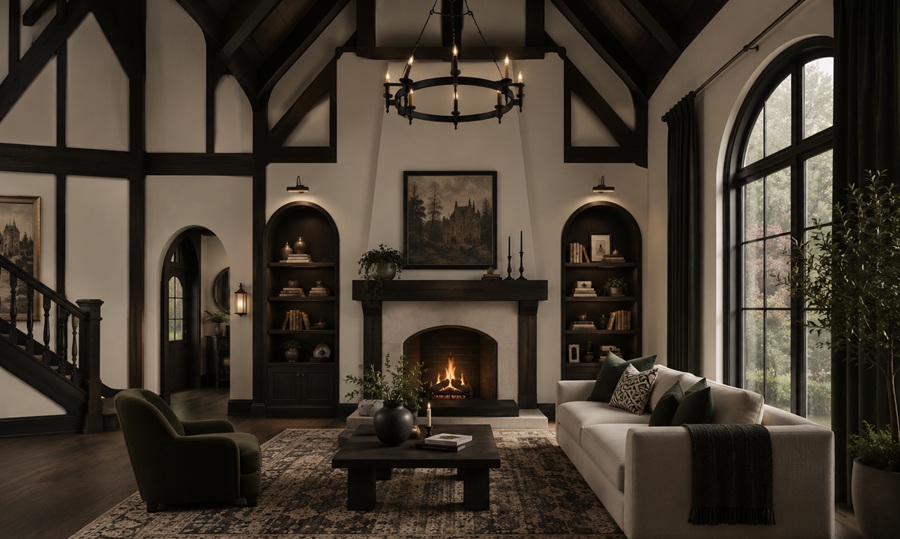
Inside, pairing the home’s original architectural details — exposed beams, arched doorways, deep windowsills — with lighter wall colors and simplified furniture keeps the space feeling current rather than heavy. White or warm gray walls contrast well against original dark wood trim, if it’s being preserved, or can replace it in areas where a full refinish is planned.
Lighting matters significantly in Tudor interiors, since original window placement was often smaller and less abundant than in newer construction. Layering ambient, task, and accent lighting compensates for this and keeps interior spaces from feeling dim.
Flooring updates also play a role. Refinishing original hardwood in a lighter, more natural stain — rather than the darker walnut or mahogany tones common when many Tudor homes were built — brightens the interior while still respecting the material’s historic character.
Common Tudor Renovation Mistakes
Removing the steep roofline or major structural details in an attempt to modernize a Tudor home typically backfires, stripping away the architectural character that made the home distinctive in the first place. Over-lightening every surface — walls, floors, trim — without any grounding dark or textural elements can also make the interior feel disconnected from the home’s exterior character.
Ignoring the chimney and roofline when planning exterior color changes is another common oversight; these elements should generally stay as focal points rather than being painted to blend in or minimized.
Choosing trendy paint colors that clash with the home’s brick or stone base is another frequent misstep. Since Tudor exteriors typically keep a substantial portion of original masonry, any new paint color needs to be tested alongside that fixed material rather than chosen in isolation.
Frequently Asked Questions
What colors work best for a modern Tudor exterior?
Warm white, soft gray, and deep charcoal are popular modern choices, typically paired with the home’s existing brick or stone rather than replacing it entirely.
Is it expensive to modernize a Tudor home?
Cosmetic updates like paint, hardware, and lighting are relatively affordable, typically a few thousand dollars, while structural changes like window replacement or roofline adjustments cost significantly more.
Do modern Tudor homes still have half-timbering?
Many do, though often simplified or reduced compared to older examples, keeping enough of the detail to read as Tudor without covering the entire facade.


