Double Hung Window Replacement: The Complete 2026 Guide
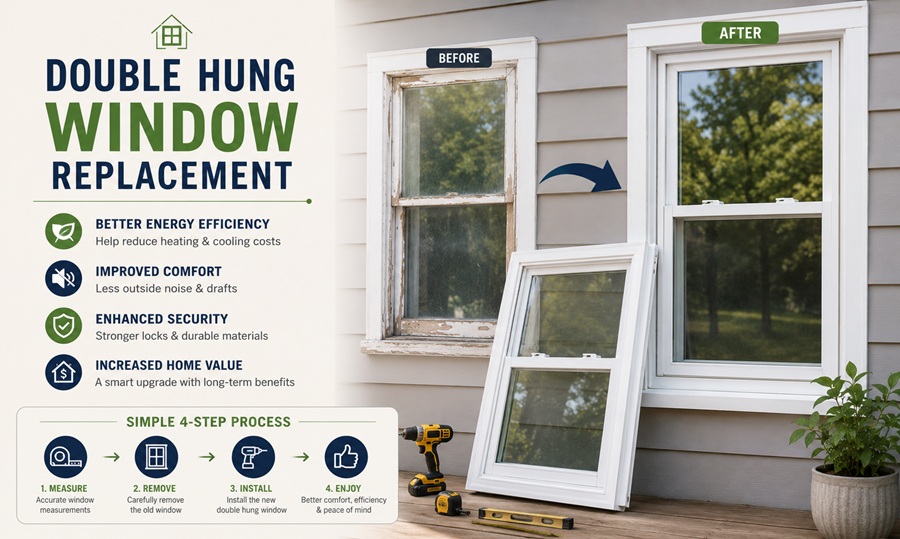
If your double hung windows are stuck, drafty, foggy between the panes, or just plain old, you’re probably trying to figure out whether to repair them, replace them yourself, or bring in a pro. This guide covers what you need to know before you sign a contract or place an order, including what double hung windows actually are, what replacement costs in 2026, which materials hold up best, and how to avoid the mistakes that turn a simple swap into an expensive redo.
What Is a Double Hung Window?
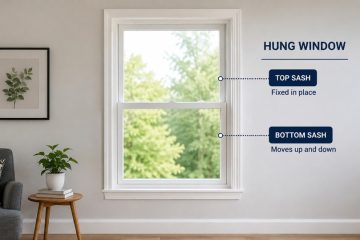
A double hung window has two sashes, the upper and lower glass panels, and both slide up and down independently within the same frame. That’s the key difference from a single hung window, where only the bottom sash moves and the top stays fixed.
Because both sashes operate, double hung windows give you more control over airflow. Crack the top open to vent warm air out near the ceiling while the bottom lets cooler air in. Most modern double hung windows also have a tilt-in feature on each sash, so you can clean the outside glass from inside the house without hauling out a ladder.
This mix of ventilation, easy maintenance, and a classic look that works on everything from colonial homes to modern builds is why double hung remains the most common residential window style installed in the U.S. today.
Signs It’s Time to Replace, Not Repair
Replace a double hung window when the seal has failed, the frame shows rot or warping, or it won’t open, close, or latch properly. Repair usually makes sense when the damage is limited to a single part, like glass, hardware, or weatherstripping, and the frame is still sound.
A repair is often enough if
- A single pane is cracked but the frame and hardware are sound
- The balance spring or sash lock is broken but everything else works
- Weatherstripping is worn but the frame isn’t rotted
Full replacement makes more sense once you notice
- Fogging or condensation trapped between the glass panes, which means the seal has failed and can’t be repaired
- Wood rot, soft spots, or visible warping in the frame
- Windows that won’t stay open, won’t latch, or are painted shut
- A noticeable draft even with the window fully closed
- Rising heating and cooling bills tied to old, single-pane glass
Many contractors use this rule of thumb: once repair costs climb past roughly half of what a new window would cost, replacement becomes the better long-term value.
2026 Double Hung Window Replacement Cost
A standard vinyl double hung window typically runs $300 to $850 installed in 2026, while wood or premium fiberglass units run $800 to $1,800 or more. Full-frame replacement adds another $150 to $250 per window compared to a retrofit install.
| Scope | Typical Installed Cost |
|---|---|
| Single double hung window (vinyl, standard size) | $300 – $850 |
| Single double hung window (wood or premium fiberglass) | $800 – $1,800+ |
| Full-frame replacement (vs. retrofit) | Add $150 – $250 per window |
| Whole-house project (10–15 windows) | $4,500 – $18,000+ |
A few factors move that number up or down.
Frame Material
Vinyl is the budget-friendly, low-maintenance default. Wood costs more but offers a traditional look and can be painted to match trim. Fiberglass and composite frames sit in the middle-to-upper range and resist warping better than vinyl in extreme climates.
Installation Method
A retrofit, or “pocket,” install, where the new window slides into the existing sound frame, is typically 15 to 20 percent cheaper than a full-frame replacement. Full-frame work strips the opening down to the rough framing and is necessary when the existing frame has rot, moisture damage, or structural issues, but it adds meaningful labor cost.
Glass Package
Double-pane glass with a Low-E coating and argon gas fill is generally considered the minimum worth installing in 2026. Upgrading to this from basic double-pane typically adds only $50 to $150 per window while noticeably cutting energy loss.
Access and Location
Second-story or hard-to-reach windows add labor for scaffolding or extended ladder work. Urban markets also tend to run 15 to 25 percent higher on labor than suburban or rural areas.
Volume
Replacing every window in the house at once usually earns a 10 to 15 percent discount per window compared to doing them one at a time.
Retrofit vs. Full-Frame Replacement
A retrofit keeps your existing frame and trim in place and costs less, while a full-frame replacement tears out everything down to the rough opening and costs more but fixes underlying damage. The right choice depends mainly on whether your current frame is still structurally sound.
Retrofit (insert) replacement keeps your existing exterior frame and trim in place, with the new window unit fitted directly into the opening. It’s faster, cheaper, and leaves your siding and interior trim undisturbed, but it only works if the current frame is structurally solid and not rotted.
Full-frame replacement removes everything down to the rough opening, including the old frame, and installs a brand-new unit with new flashing and trim. It costs more and takes longer, but it’s the right call when there’s water damage, rot, or when you’re changing the window size or style.
A reliable installer will inspect the frame condition before recommending one over the other. Be wary of any contractor who quotes a price without actually checking.
Choosing a Frame Material
| Material | Pros | Cons | Best For |
|---|---|---|---|
| Vinyl | Affordable, low maintenance, good insulation | Fewer color and paint options, can warp in extreme heat | Most budget-conscious replacements |
| Wood | Classic look, paintable or stainable, strong insulation | Requires upkeep, higher cost, vulnerable to moisture if unsealed | Historic or traditional-style homes |
| Fiberglass | Very durable, resists warping, low maintenance | Higher upfront cost | Extreme climates, long-term investment |
| Composite | Combines wood-look with better durability | Mid-to-high cost | Homes wanting a wood aesthetic without wood’s upkeep |
| Aluminum | Slim sightlines, strong, low maintenance | Poor insulator unless thermally broken | Modern designs, mild climates |
Energy Efficiency: What Actually Matters
Two features drive most of the real energy savings in a window replacement, a Low-E coating and an inert gas fill between the panes. Together they cut heat transfer far more than glass thickness or brand name alone.
- Low-E coating. A microscopically thin coating that reflects heat while letting light through, reducing both summer heat gain and winter heat loss.
- Argon or krypton gas fill between the panes. This inert gas insulates better than plain air and slows heat transfer through the glass.
Look for windows with an ENERGY STAR rating appropriate to your climate zone, and ask installers for the specific U-factor and Solar Heat Gain Coefficient (SHGC) numbers rather than a generic “energy efficient” label.
DIY vs. Hiring a Professional
Retrofit installs on a single-story home with a sound frame are within reach for an experienced DIYer with the right tools, but most homeowners still hire a professional. Poor flashing and sealing can cause hidden water damage for years, and many manufacturer warranties only apply with professional installation.
A few reasons pros still handle most of these jobs:
- Proper flashing and sealing prevent water intrusion, and a mistake here can cause hidden rot for years before it’s noticed
- Full-frame work often requires coordination with siding or trim repair
- Many manufacturers only honor their warranty with professional installation
- Labor typically runs 30 to 50 percent of total project cost, but a botched DIY install can cost far more to fix later
If you do go the DIY route, stick to retrofit installs and confirm the existing frame is square, dry, and rot-free before you order the replacement window.
Questions to Ask a Window Contractor
- Will this be a retrofit or full-frame installation, and why?
- What’s included in the quote, such as removal, disposal, permits, and trim work?
- What are the U-factor and SHGC of the glass package you’re recommending?
- Is the installation covered under the manufacturer’s warranty, and what’s your labor warranty?
- How many double hung window installations have you completed in the last year?
- Can I see references or photos from recent local projects?
Getting at least three quotes is standard practice. Prices for the same job can vary significantly between contractors in the same area.
Frequently Asked Questions
How long does a double hung window replacement take?
A single retrofit window typically takes under an hour once the crew is on site. A full-house project with 10 to 15 windows generally wraps in one to two days, weather permitting.
Do double hung windows cost more than single hung?
Yes, generally. Double hung windows have more moving parts, two operable sashes instead of one, which adds to both material and labor cost compared to single hung.
Can I replace just the sashes instead of the whole window?
In some cases, yes. Sash replacement kits exist for frames that are still in good condition. This is cheaper than full window replacement but isn’t an option if the frame itself is damaged.
What’s the lifespan of a new double hung window?
Vinyl windows typically last 20 to 30 years, fiberglass and composite can exceed 30 to 40 years, and well-maintained wood windows can last even longer with periodic refinishing.
Is now a good time to replace windows, or should I wait?
If you’re already seeing drafts, fogged glass, or rising energy bills, waiting usually costs more in wasted energy than it saves. Bundling multiple windows into one project is also the most cost-effective way to do it.