What Is a Casement Window? A Simple Explanation
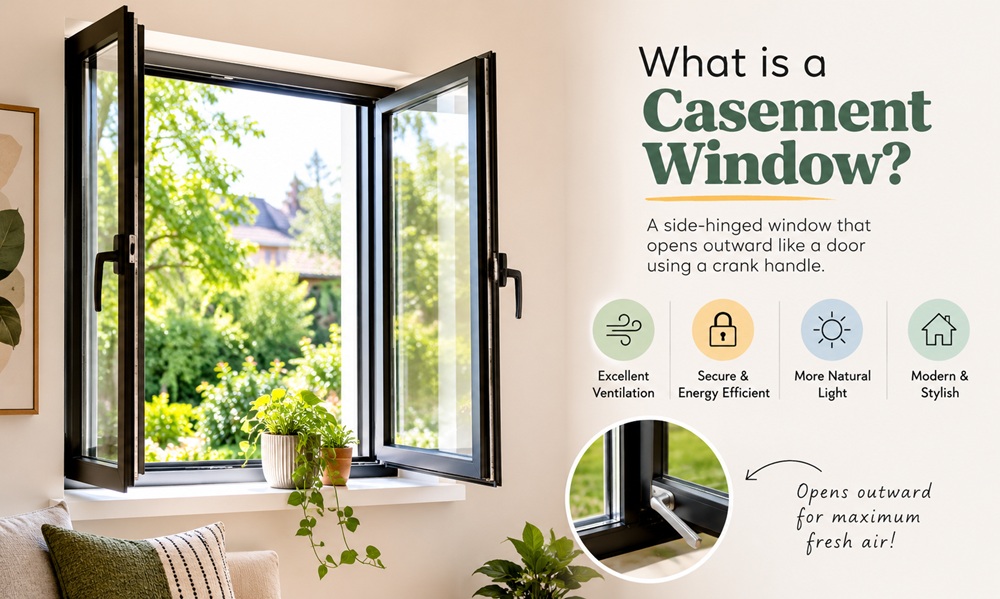
A casement window is a window that’s hinged on one side and opens outward using a hand crank, similar to a door swinging open rather than sliding up and down. Unlike double-hung windows, which slide vertically, casement windows use hinges and a crank mechanism, which allows them to open fully and catch passing breezes for better ventilation than many other window styles.
They’re one of the more common window types in US homes, particularly in kitchens, above sinks, or in spots where reaching up to slide a window open isn’t practical. Their design also makes them a popular choice for homeowners prioritizing energy efficiency, since the way they close creates a tighter seal than many sliding alternatives.
Questions Readers Ask About Casement Windows
How do casement windows work? A crank handle on the interior turns a gear mechanism connected to the window frame, pushing the window outward on its hinges. Some modern versions also offer a lever-lock system alongside the crank for a tighter seal when closed, which adds an extra layer of security compared to older casement designs.
What are the pros and cons of casement windows? On the plus side, they seal tightly when closed, which makes them more energy efficient than many sliding window styles, and they open fully for maximum airflow, which is especially useful in rooms that don’t get much of a cross breeze otherwise. On the downside, they extend outward, which can be a problem near walkways, decks, or in tight side yards, and the crank mechanism can wear out over time compared to simpler sliding designs.
How much do casement windows cost? In the US, casement windows typically run $300 to $800 per window installed, depending on size, frame material, and glass type. Vinyl frames tend to be the most budget-friendly, while wood or fiberglass frames cost more but often last longer and can be a better match for certain architectural styles.
Are casement windows more energy efficient than other types? Generally, yes. Because the sash presses against the frame when closed (rather than sliding along a track), casement windows typically seal more tightly, reducing air leakage compared to double-hung or sliding windows of similar quality. This tighter seal can make a measurable difference in heating and cooling costs over time, especially in climates with significant seasonal temperature swings.
Where are casement windows best used? They work particularly well above kitchen sinks, in bathrooms, and anywhere reaching to slide a window up isn’t convenient, since the crank can be operated from a distance without leaning over a counter. They’re also a popular choice for hard-to-reach spots, like above a stove or a tub, where a sliding window would be awkward to operate.
How Do Casement Windows Compare to Double-Hung Windows?
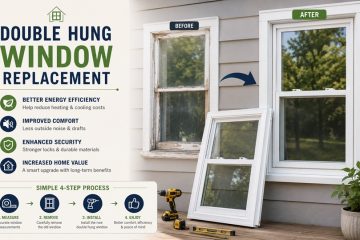
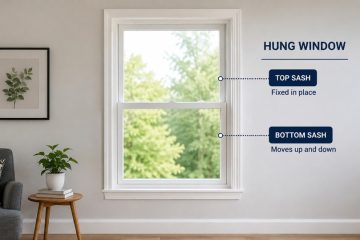
Double-hung windows slide vertically and are a familiar, traditional choice for many US homes, with the advantage of being easy to clean from inside since both sashes tilt in. This makes them especially popular in multi-story homes, where cleaning the exterior side of an upper-floor window would otherwise require a ladder.
Casement windows, by contrast, offer better airflow and a tighter seal but can’t be angled inward for cleaning the same way, meaning exterior-facing glass sometimes requires cleaning from outside, especially on upper floors. Neither style is objectively better; the choice usually comes down to ventilation needs, the home’s architectural style, and how the window’s location affects opening clearance.
Real-World Example: A Kitchen Renovation
During a kitchen remodel, a homeowner replacing an old double-hung window above the sink often switches to a casement window specifically because it can be cranked open without needing to reach over the countertop or faucet. This is one of the most common real-world reasons homeowners choose casement over other styles during a renovation, since the ergonomics of a crank handle are simply more practical in that location than a sash someone has to lift.
Real-World Example: A Home in a Windy Coastal Region
In coastal areas with regular strong breezes, casement windows are popular because they can be angled slightly to catch and direct airflow into the room, functioning almost like a small sail. This makes them a practical choice for homes that rely on natural ventilation rather than air conditioning during milder months, particularly in older coastal homes that were originally designed around cross-breeze cooling.
Frequently Asked Questions
Can casement windows be automated?
Yes, many manufacturers offer motorized casement windows that open and close with a remote or smart home app, though this adds to the overall cost and is more common in newer construction or higher-end renovations.
Do casement windows require more maintenance than other types?
The crank mechanism does need occasional lubrication and can wear out after many years of use, but otherwise casement windows are comparable in maintenance needs to other window styles, and most homeowners only notice the crank needing attention after a decade or more of regular use.
How Long Do Casement Windows Last?
With regular care, quality casement windows typically last 20 to 40 years, depending on frame material and climate exposure. Vinyl frames tend to hold up well with minimal upkeep, while wood frames offer a classic look but need periodic repainting or sealing to prevent moisture damage over time.