Double Casement Windows: What They Are and When to Use Them
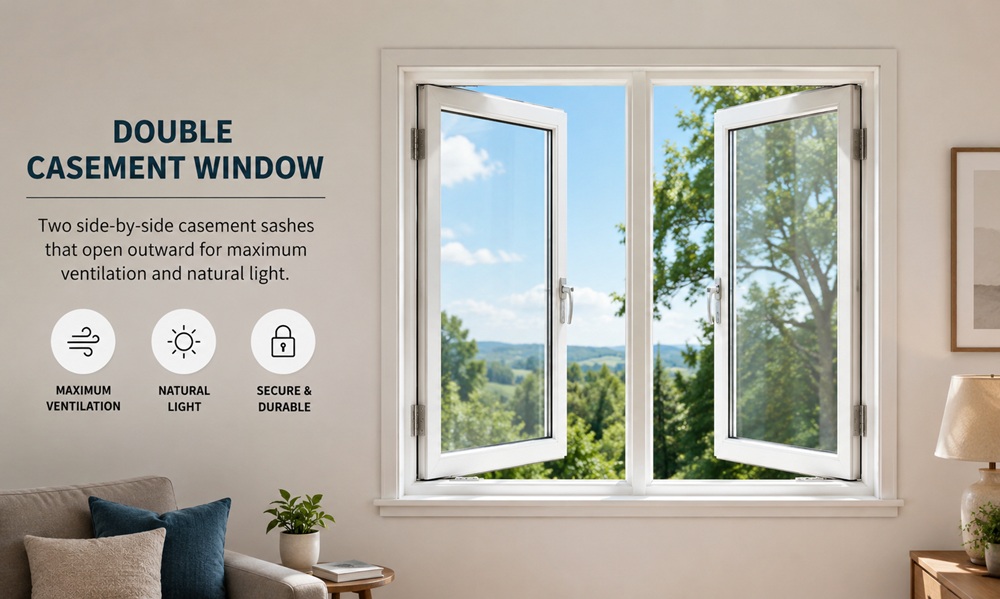
A double casement window is two casement windows installed side by side in a single frame, each opening independently with its own crank, and typically meeting in the middle when both are closed. It’s essentially a wider version of a standard casement window, designed for spots where a single crank-out sash isn’t wide enough to cover the opening, such as a large living room wall or a wide kitchen window.
Because each side operates independently, homeowners get more control over airflow than a single large window would allow, opening just one side on a cooler day or both for maximum ventilation. This flexibility is one of the main reasons double casement windows have become a popular choice in newer home designs with larger window openings.
Questions Readers Ask About Double Casement Windows
How is a double casement window different from a single casement window? A single casement window is one sash on one crank. A double casement combines two sashes in one frame, usually meeting at a center mullion (the vertical bar between them), giving a wider window opening while still functioning like two independent casements that can be opened separately or together.
What does a double casement window cost? In the US, expect $600 to $1,600 per unit installed, roughly double the cost of a single casement window given the larger glass area and two separate crank mechanisms, though exact pricing depends on frame material and size. Custom or oversized units can push toward the higher end of that range or beyond.
Are double casement windows harder to install? Installation follows similar steps to a single casement window but requires more precise framing given the wider opening and the added weight of two sashes. Most homeowners hire a professional installer for double casement units rather than treating it as a DIY project, since an improperly framed opening can affect how well both sashes seal when closed.
Double Casement vs Single Casement
| Feature | Single Casement | Double Casement |
| Number of sashes | One | Two |
| Best for | Small to medium openings | Wide walls or large openings |
| Ventilation control | One zone | Two independent zones |
| Typical cost per unit | $300 to $800 | $600 to $1,600 |
Where Double Casement Windows Work Best
Double casement windows are a popular choice for larger rooms, like living rooms or primary bedrooms, where a wide wall would otherwise need multiple separate windows. They’re also common in newer home construction across the US, where architects design wider window openings for more natural light without giving up the ventilation control that casement styles offer over large fixed panes.
Real-World Example: A Living Room Wall
A homeowner replacing an old picture window, one that doesn’t open at all, with a double casement window gains both the wide view the original window offered and the ability to actually open it for airflow, something the fixed picture window never allowed. This is a common upgrade in older homes where large fixed windows were once standard but modern buyers increasingly expect natural ventilation options.
Real-World Example: New Construction
In new home builds, double casement windows are frequently specified for great rooms and primary suites because they balance a large, light-filled opening with functional ventilation, which single smaller windows or fixed picture windows can’t offer on their own. Builders often favor this style when a home’s design calls for a dramatic window feature that still needs to function for everyday airflow.
Are Double Casement Windows Energy Efficient?
Yes, generally. Like single casement windows, the compression seal created when both sashes close tightly against the frame helps reduce air leakage compared to sliding window styles. Pairing double casement windows with double- or triple-pane glass further improves insulation, which matters more in regions with significant seasonal temperature swings, such as much of the Midwest and Northeast.
Frequently Asked Questions
Can you order custom sizes for double casement windows?
Yes, most manufacturers offer custom widths and heights, which is common given how much wall openings vary between homes, especially in older construction where standard sizing doesn’t always apply.
Do both sashes need to open the same direction?
Not necessarily; many double casement windows are designed with sashes that open in opposite directions, which can help funnel airflow more effectively into the room, similar to how the angled sail effect works with single casement windows in breezy locations.
Is a Double Casement Window Right for Your Home?
If you’re working with a wide wall opening and want strong ventilation control alongside plenty of natural light, a double casement window is usually a better fit than either a single large picture window or two separate smaller windows installed independently. It’s worth discussing exact sizing with a window professional, since framing tolerances for a double unit are less forgiving than for a single casement.